The Future Of Human-AI Collaboration
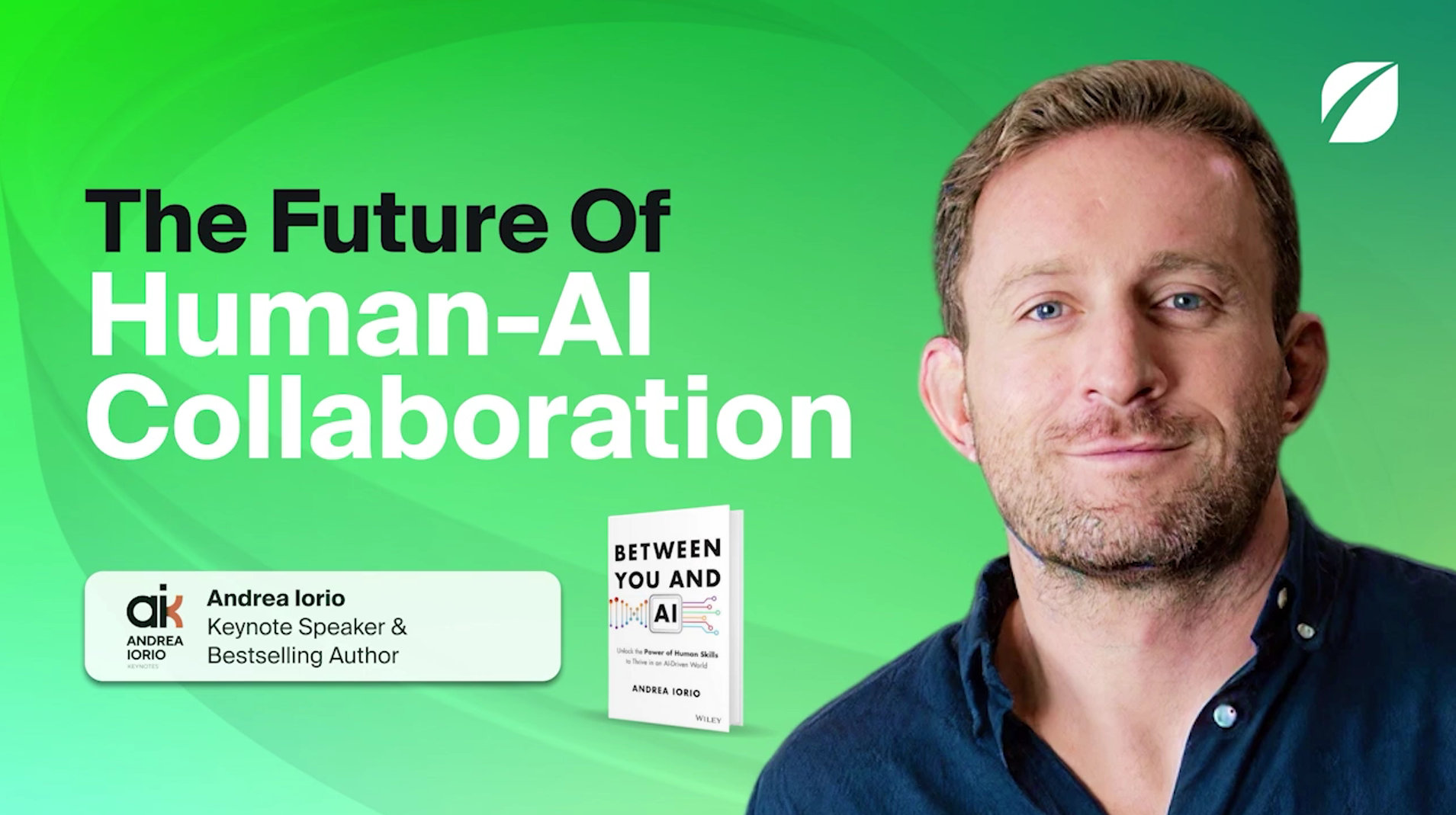
In this episode, Jeff Dance and expert Andrea Iorio explore the evolving landscape of human and AI collaboration. Andrea outlines why most organizational AI projects fail, emphasizing the necessity of understanding the complementary roles of humans and AI. Through insights on automation, augmentation, and unique human skills, the discussion addresses the impacts on the workforce, productivity paradox, and the importance of soft skills. The conversation also highlights responsible AI use, the transformation of job roles, and preparing for rapid technological change.



In this episode, Jeff Dance and expert Andrea Iorio explore the evolving landscape of human and AI collaboration. Andrea outlines why most organizational AI projects fail, emphasizing the necessity of understanding the complementary roles of humans and AI. Through insights on automation, augmentation, and unique human skills, the discussion addresses the impacts on the workforce, productivity paradox, and the importance of soft skills. The conversation also highlights responsible AI use, the transformation of job roles, and preparing for rapid technological change.
In this episode, Jeff Dance and expert Andrea Iorio explore the evolving landscape of human and AI collaboration. Andrea outlines why most organizational AI projects fail, emphasizing the necessity of understanding the complementary roles of humans and AI. Through insights on automation, augmentation, and unique human skills, the discussion addresses the impacts on the workforce, productivity paradox, and the importance of soft skills. The conversation also highlights responsible AI use, the transformation of job roles, and preparing for rapid technological change.

Defining Human-AI Collaboration
-
The Centaur Analogy: The most effective players are not AI alone, but humans who use AI to enhance creativity and strategy, similar to “Centaur chess” where humans and machines play as a team.
-
Augmentation over Substitution: True collaboration occurs when organizations view AI as a tool to automate repetitive tasks, thereby increasing the quality and importance of human work rather than replacing the worker.
-
Democratization of Skills: AI acts as a “calculator for knowledge,” giving anyone access to specialized repertoires (like legal or coding knowledge) that previously took years of training to acquire.
The Evolving Skill Set: Hard vs. Soft Skills
-
Commoditization of Hard Skills: As AI excels at data-driven, measurable tasks, technical “hard skills” are becoming more accessible and less of a competitive differentiator.
-
The Rise of Soft Skills: In a survey of 247 HR leaders, 93% preferred candidates with excellent soft skills over those with only technical expertise, as soft skills are harder to teach and less replaceable by AI.
-
Core Human Pillars: Andrea identifies three areas where humans must thrive:
-
Cognitive: Prompting, data sense-making, and “re-perception”.
-
Behavioral: Adaptability, augmentation, and antifragility.
-
Emotional: Empathy, trust, and agency.
-
The Productivity Paradox and Responsibility
-
The Trap of Uniformity: If everyone uses the same AI tools to be productive, individual competitive advantage disappears, leading to “polluted feeds” and a lack of originality.
-
The Black Box Problem: Because AI processes data syntactically (without true meaning), it lacks a conscience and moral judgment, making human oversight essential for ethical outcomes.
-
Human Accountability: Humans must remain “legally, morally, and technically responsible” for AI outputs; organizations cannot outsource accountability for hallucinations or biased decisions.
Strategies for Successful AI Integration
-
Reverse Mentoring: Leveraging the “beginner’s mindset” of younger, tech-native generations to mentor experienced leaders helps organizations update beliefs and adapt to exponential change.
-
Data Readiness: AI projects often fail (up to 95%) because organizations attempt to deploy tools before ensuring their underlying data is complete and accurate.
-
Safe Experimentation: Leaders must communicate that AI is a “sparring partner” for brainstorming, creating a safe cultural space where employees don’t feel their jobs are threatened.
Future Trends in Space and AI
-
Evolution of Rocket Lab: The aerospace industry is shifting from small satellite launches to complex interplanetary endeavors under the leadership of Sir Peter Beck.
-
Challenges: Navigating international regulations and the rising risks posed by space debris remain primary hurdles for future missions.
-
AI and Computer Vision: These technologies are being leveraged to enable autonomous spacecraft operations, improving safety and reducing the need for constant human intervention.
-
Global Collaboration: Sustainable space exploration requires international cooperation for shared infrastructure and effective space traffic management.