The
Future Of Decentralized Robotics
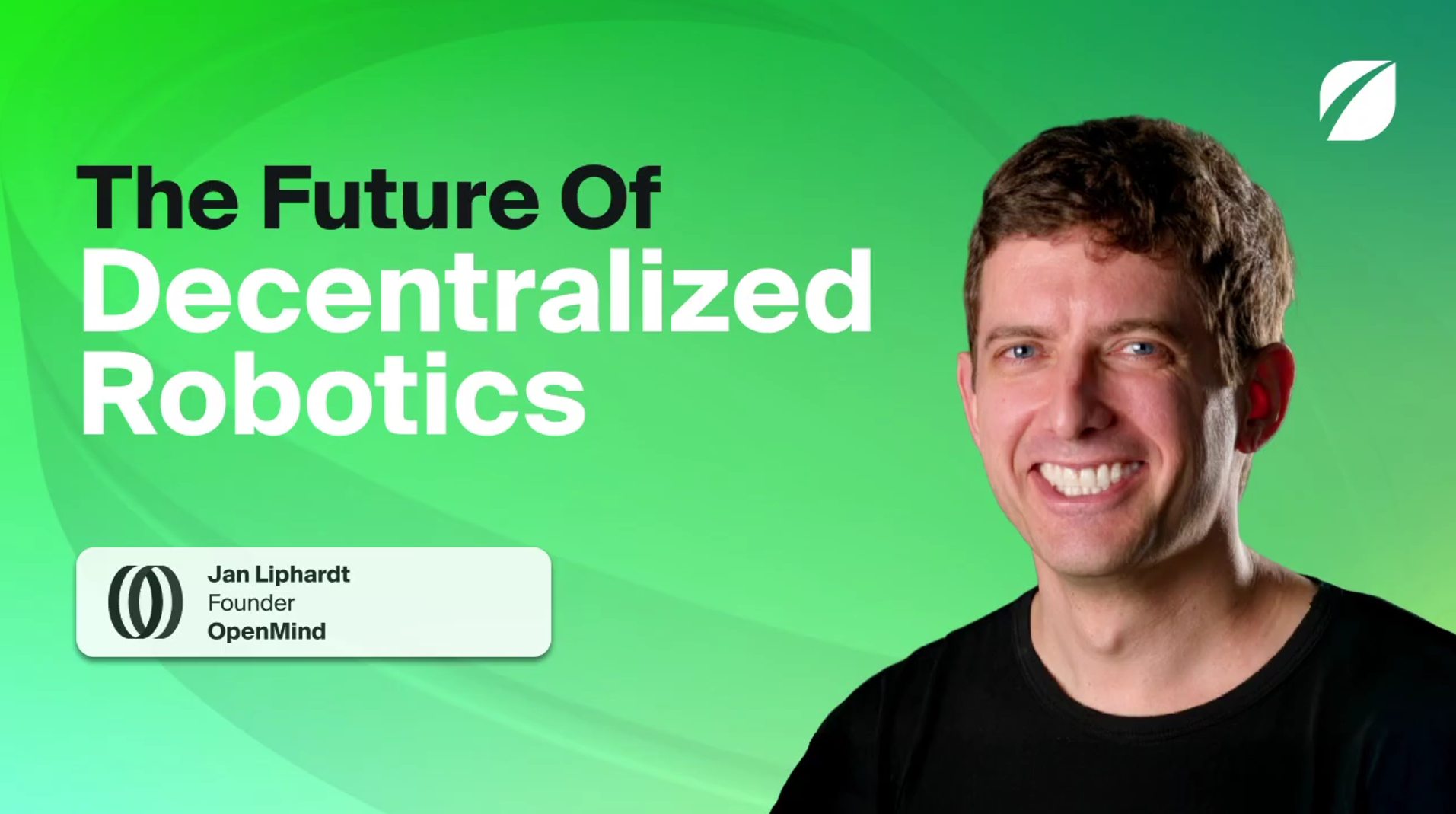
This episode explores The Future Of Decentralized Robotics with Jan Liphardt, founder of OpenMind. The discussion delves into the critical role of decentralized systems for building trustworthy, collaborative robots and highlights the challenges of machine identity, transparency, and security. Jan emphasizes open source, modular robotics software, and the rapid evolution necessary for responsible robot coordination in homes and cities. Key use cases in healthcare, education, and accessibility demonstrate the social impact and potential of intelligent custom robotic companions. The conversation also addresses the need for proactive discourse, regulation, and responsible innovation to ensure robotics technology broadly benefits humanity.



This episode explores The Future Of Decentralized Robotics with Jan Liphardt, founder of OpenMind. The discussion delves into the critical role of decentralized systems for building trustworthy, collaborative robots and highlights the challenges of machine identity, transparency, and security. Jan emphasizes open source, modular robotics software, and the rapid evolution necessary for responsible robot coordination in homes and cities. Key use cases in healthcare, education, and accessibility demonstrate the social impact and potential of intelligent custom robotic companions. The conversation also addresses the need for proactive discourse, regulation, and responsible innovation to ensure robotics technology broadly benefits humanity.
This episode explores The Future Of Decentralized Robotics with Jan Liphardt, founder of OpenMind. The discussion delves into the critical role of decentralized systems for building trustworthy, collaborative robots and highlights the challenges of machine identity, transparency, and security. Jan emphasizes open source, modular robotics software, and the rapid evolution necessary for responsible robot coordination in homes and cities. Key use cases in healthcare, education, and accessibility demonstrate the social impact and potential of intelligent custom robotic companions. The conversation also addresses the need for proactive discourse, regulation, and responsible innovation to ensure robotics technology broadly benefits humanity.

Jan’s Journey in Robotics
- Multidisciplinary Background: Jan transitioned from a PhD in physics to bioengineering at Stanford, eventually moving into robotics through his experience building precision instrumentation and handling sensitive healthcare data.
- Home Integration: To truly understand the technology, Jan lives with three robot dogs (Bits, Bites, and Frenchie) and a humanoid (Iris), allowing him to observe spontaneous human-robot interactions in a household setting.
- Inspiration: His passion is driven by a childhood fascination with intelligent machines from science fiction and a desire to connect advanced hardware with data privacy and physical manipulation.
The Role of Decentralization and Trust
- Machine-to-Machine Communication: Jan argues that as autonomous machines proliferate, they need protocols to communicate and coordinate directly with each other (e.g., a humanoid interacting with a Waymo delivery vehicle).
- Blockchain for Identity: OpenMind repurposes blockchain infrastructure to establish immutable machine identities and coordination layers, ensuring trust without the latency of putting all data on-chain.
- Constitutional Robotics: To ensure safety, Jan advocates for “public guardrails,” such as baking Asimov’s Laws of Robotics into immutable ledgers like Ethereum so the rules are transparent and verifiable.
OpenMind’s Modular Approach
- Small Model Architecture: Rather than one massive “end-to-end” AI, OpenMind uses 10 to 20 small models that communicate via natural language to make decisions, making the system easier to debug and upgrade.
- Skill-Sharing (Fabric): The platform enables “Fabric,” a system where one robot can learn a specific skill—like a safe hugging policy—and share it instantaneously with millions of other connected machines.
- Open Source Philosophy: Jan emphasizes that security through obscurity fails; therefore, robotics infrastructure should be open-source to allow for public audit and collective trust.
Future Trends and Societal Impact - Beyond Mundane Tasks: Jan believes the future of robotics isn’t just about “wet wiping floors” but about companionship, education, and health, such as robotic seeing-eye dogs for the blind.
- Healthcare Breakthroughs: Humanoids are already being tested in memory care facilities to provide social engagement and emotional support for isolated patients.
- Regulatory and Insurance Gaps: A major hurdle for the industry is the lack of specific regulatory frameworks and the difficulty of obtaining insurance for large-scale home robot deployments.