The
Future Of AI & Intellectual Property
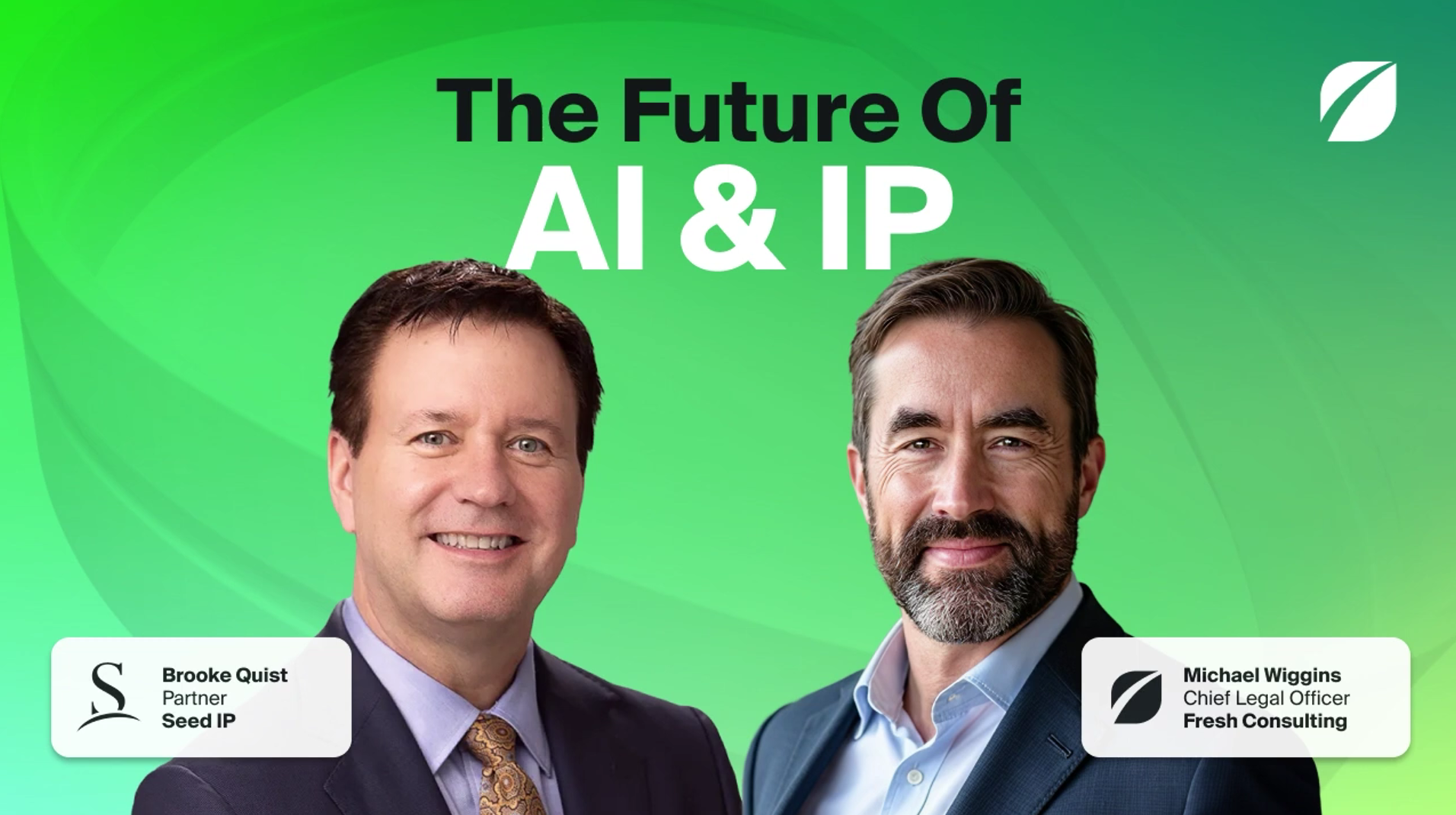
This episode explores the evolving intersection of artificial intelligence (AI) and intellectual property (IP), featuring legal experts Brooke Quist and Michael Wiggins. The discussion covers the current and future impact of AI on legal practices, especially in patent, copyright, and data use. Key takeaways include the challenges of integrating AI into law, the importance of proprietary datasets, legal and ethical considerations for AI-driven IP, and guidance for organizations in managing AI risks and opportunities.





This episode explores the evolving intersection of artificial intelligence (AI) and intellectual property (IP), featuring legal experts Brooke Quist and Michael Wiggins. The discussion covers the current and future impact of AI on legal practices, especially in patent, copyright, and data use. Key takeaways include the challenges of integrating AI into law, the importance of proprietary datasets, legal and ethical considerations for AI-driven IP, and guidance for organizations in managing AI risks and opportunities.
This episode explores the evolving intersection of artificial intelligence (AI) and intellectual property (IP), featuring legal experts Brooke Quist and Michael Wiggins. The discussion covers the current and future impact of AI on legal practices, especially in patent, copyright, and data use. Key takeaways include the challenges of integrating AI into law, the importance of proprietary datasets, legal and ethical considerations for AI-driven IP, and guidance for organizations in managing AI risks and opportunities.

Impact of AI on Legal Practice
-
Data Processing Capabilities: AI is highly effective at digesting large, unstructured data sets and summarizing complex legal documents.
-
Operational Efficiency: For in-house counsel, AI enables “doing more with less” by automating routine tasks and helping manage external legal budgets more effectively.
-
Human-in-the-Loop Necessity: While AI can brainstorm and suggest contract provisions, its tendency for “hallucinations” requires experienced attorneys to review and verify all outputs.
The Evolving IP Landscape
-
Copyright Challenges: Current legal trends suggest AI training on third-party data may be considered “fair use,” but the risk of market dilution for human creators remains a significant concern.
-
Patentability Hurdles: While the patent office currently does not recognize AI as an inventor, new strategies are being developed to patent AI-assisted innovations by emphasizing technical advantages.
-
Need for Statutory Changes: As international jurisdictions diverge, there is an urgent need for harmonized statutes to protect creators and innovators across borders.
Governance and Risk Management
-
Shadow AI Mitigation: Companies must manage “Shadow AI”—the unauthorized use of AI tools by employees—by establishing clear policies and providing secure, company-sanctioned platforms.
-
Proprietary Datasets: The competitive advantage in the AI economy is shifting from the AI models themselves to the proprietary data used to train and fine-tune them.
-
Ethical Principles: Future AI systems will require greater transparency (“white box” models) to ensure decisions—such as those in recruitment or patenting—are defensible and fair.
Future Trends in AI and IP
-
Economic Productivity: AI is expected to serve as a critical economic accelerator, driving GDP growth through increased productivity even as global populations decline.
-
Physical Integration: The future of AI extends beyond text and images to the “Internet of Things,” where AI will control physical machines, creating complex new IP implications.
-
Workforce Evolution: Junior roles may be displaced by automation, requiring new training models to ensure the next generation of legal professionals can work effectively alongside AI.